JTCC made history as one of the first tennis centers in the U.S. to hire a full-time Adaptive Tennis Program Manager. We spoke with Gabby Hesse, Head of Wheelchair & Adaptive about what “defining excellence” means through adaptive sport and how JTCC is changing what’s possible for athletes of all abilities.
What drew you to this role, and what does “defining excellence” mean to you personally in the context of adaptive sports?
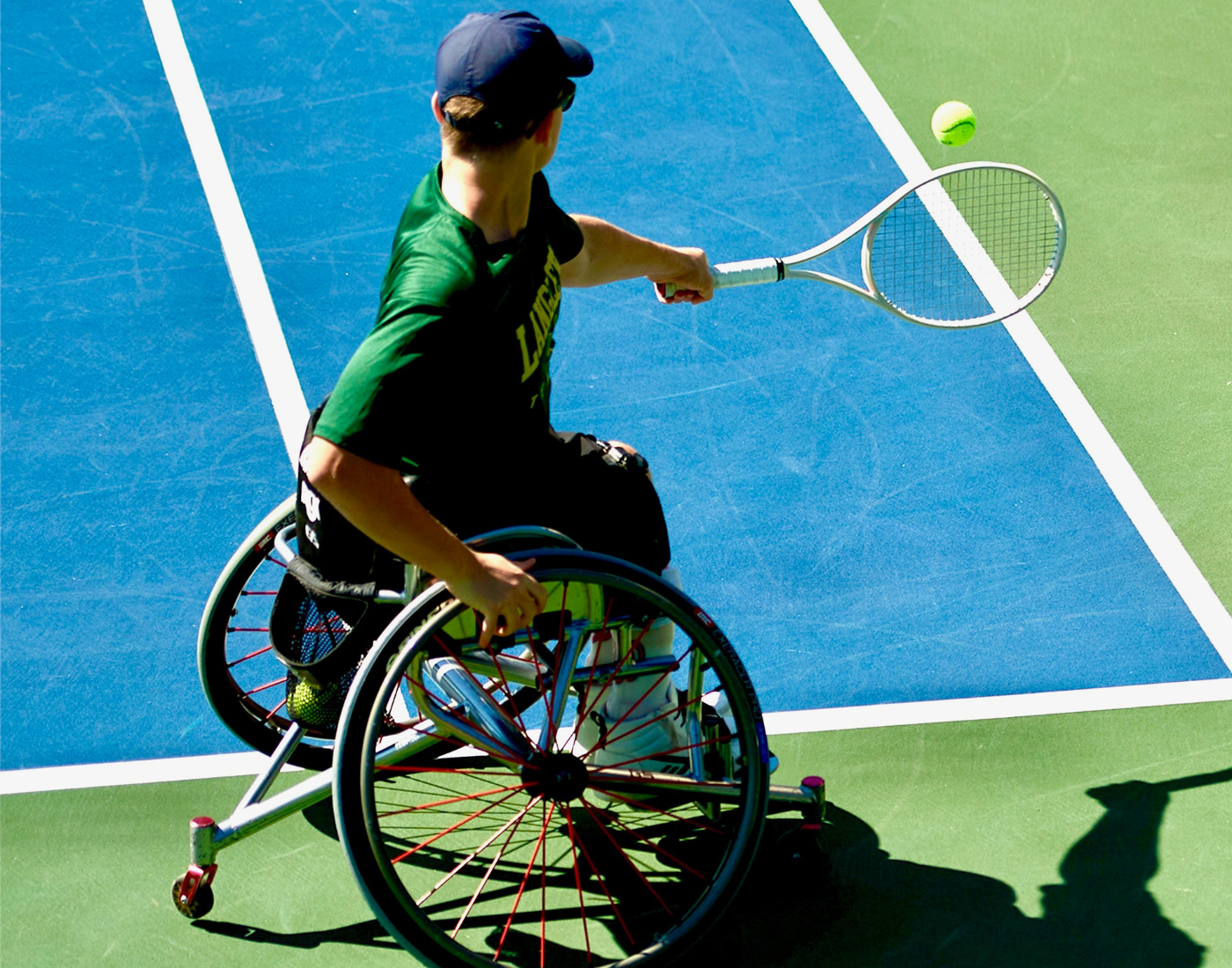
Becoming the Adaptive Tennis Program Manager was truly a defining moment in my career, and it’s pretty wild to say that being only in my twenties. When I entered JTCC as part of an AmeriCorps fellowship program, excited to give back to the sport that has given me so much, one of the first experiences that introduced me to adaptive tennis was the fact that my assistant collegiate coach was a wheelchair user and a USTA National Coach for wheelchair tennis. I had the opportunity through JTCC to be involved with their wheelchair and Special Olympics tennis programs and fell in love with the sport and what is possible when we create opportunities for athletes with disabilities. I stayed on staff at JTCC in a combined marketing and adaptive tennis manager role, and my passion for this space grew as I learned from and partnered with adaptive sports organizations, rehab hospitals, and players to create ways to play. When the adaptive programs at JTCC experienced substantial growth, I was offered a full-time role to lead and develop them.
In adaptive sport, like sport in general, excellence is defined in a myriad of ways because ultimately it is the player who establishes their own definition of excellence. My job is to advocate for the player, and if the infrastructure to achieve their dream doesn’t exist yet, investigate ways we can create it. In my role, excellence is when every athlete, regardless of disability, has access to the same opportunity to pursue their dreams, and I define excellence by working to create equitable pathways and high-quality experiences for players to do that.
You work with wheelchair athletes, Special Olympians, Para Standing players like Nicky Maxwell, and military veterans. Can you share a specific moment when you witnessed someone define their own excellence in a way that surprised or moved you? What did that teach you about the power of adaptive tennis?
There are so many impactful moments in the few short years I’ve been leading in this space.
Our military veterans program was started before I joined JTCC, and one aspect I welcomed but didn’t fully understand was why military family members were encouraged to participate. Then a daughter of one of our veterans, who was diagnosed with PTSD, wrote a poignant article called “We Signed Up Too” about the impact of service on military kids, and it completely changed my perspective.
Nicky Maxwell was the first amputee to run track in NCAA Division I at Harvard. While he grew up playing tennis with his family, he didn’t see it as a pathway for him to compete. When JTCC hosted its first para-standing tennis activation in 2023, Nicky showed up and was overflowing with excitement to learn that there was a growing pathway for players with physical disabilities to play standing instead of in a wheelchair. Less than three years later, he has competed at the European and World Para Standing Tennis Championships and was elected to serve as President of the International Para Standing Tennis Association, impacting thousands of athletes who were once in the same boat—lacking a pathway.
One of the most impactful moments for me was learning that a Spanish-speaking wheelchair user had traveled almost two hours, hitching a ride from a friend, to try wheelchair tennis as part of JTCC’s annual camp. He was encouraged by a few of our players who knew him through a spinal cord injury support group for Spanish-speaking individuals, and he took the leap to try something completely new.
On my drive home, I contemplated the amazing fact that he went so far out of his comfort zone to try something new, with no guarantee he would like it. It struck me that this is the true power of opportunities for players who historically haven’t had access: it empowers others to find themselves in the sport in ways they may never have dreamed. People have a hard time seeing themselves as tennis players until they see others like them doing it, and when there’s no opportunity to play, there’s no understanding that it’s even a possibility. Adaptive tennis is powerful because of the community that exists within it, and this strong sense that anything is possible if it’s what you dream and want to do.
What are the biggest barriers that prevent people with disabilities from accessing tennis and discovering their athletic potential? And more importantly, how does JTCC’s adaptive program specifically remove those barriers in ways that other facilities don’t?
The number one barrier is the lack of opportunity to participate in adaptive tennis at any level. It starts with players having access to learn the sport and to have the chance to play and learn from coaches. One contributing factor is that many coaches and people in general haven’t been exposed to or interacted with people with disabilities, and there is a natural fear of the unknown and not wanting to say anything to hurt or offend people.
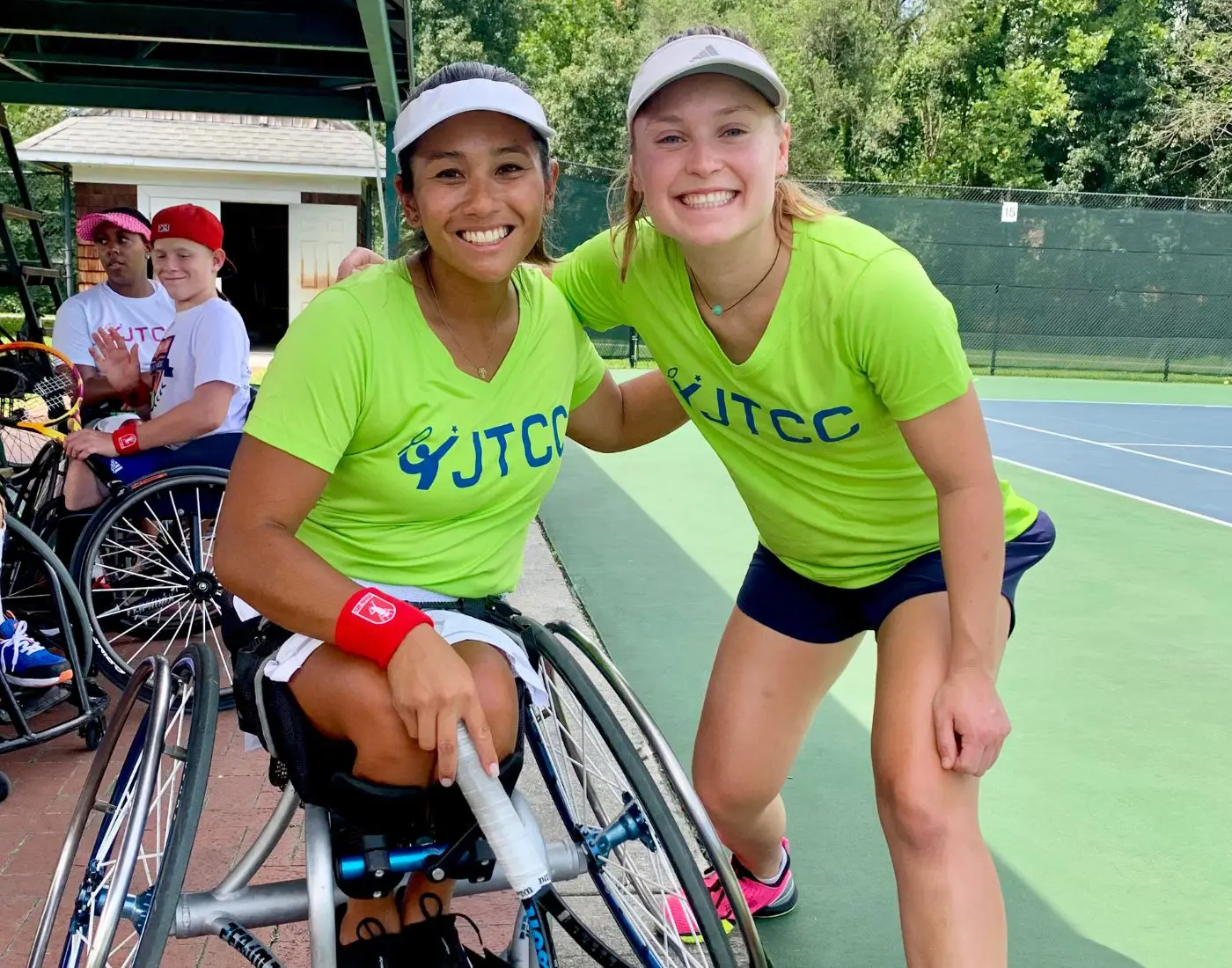
What we do at JTCC is educate our coaches on disability awareness and how to build positive relationships with people with disabilities, as well as how to accommodate different needs that players may have. What this effort does is create a culture where people with disabilities feel welcomed—that they aren’t the odd one out—and they are surrounded by people who can and will support them on their tennis journey.
My favorite compliment I get frequently from players is that JTCC is one of the only places where, when they go through the door, people aren’t asking them about their disability and what happened—they’re asking how their tennis game is coming along and the date of their next tournament. It is important at JTCC that we model for our juniors and adult members that disability is normalized, that people with and without disabilities can build positive relationships, and we’ve seen ways that our members have stepped up to support them—from volunteering in programming or tournaments, to completing projects to make JTCC more accessible and improving our coach education materials, and even starting local nonprofits to add more opportunities for adaptive tennis players.
As we look toward 2026 and JTCC’s facility expansion, what would it mean for the adaptive tennis program to have even more resources, equipment, and dedicated space? Paint us a picture of what excellence could look like if you had everything you needed to serve this community.
The vision for adaptive tennis at JTCC is to create a comprehensive, integrated pathway for all players with disabilities to find community and unlock their potential. This is what we have succeeded in on the mainstream side of the sport at JTCC—and what is a very real possibility to create.
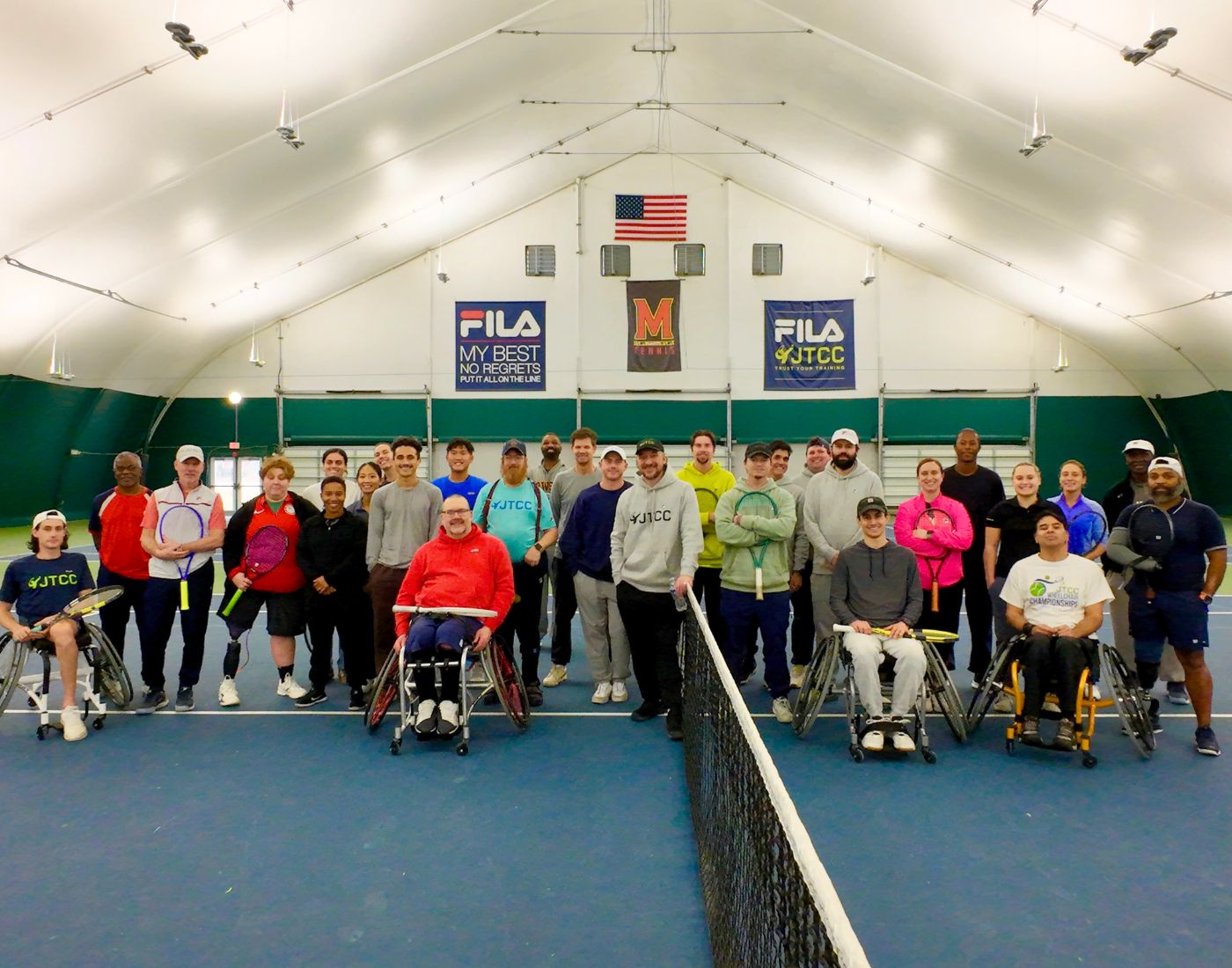
As our program grows, serving more than 260 local players with disabilities and military veterans, each player has their own individual goals within the sport, and the larger we grow, the more diverse that pool of dreams becomes. There are pathways that can be created that run parallel to what exists in the traditional sport, and pathways that can be integrated into what already exists, because of the unique aspect of tennis—that players with and without disabilities can play together.
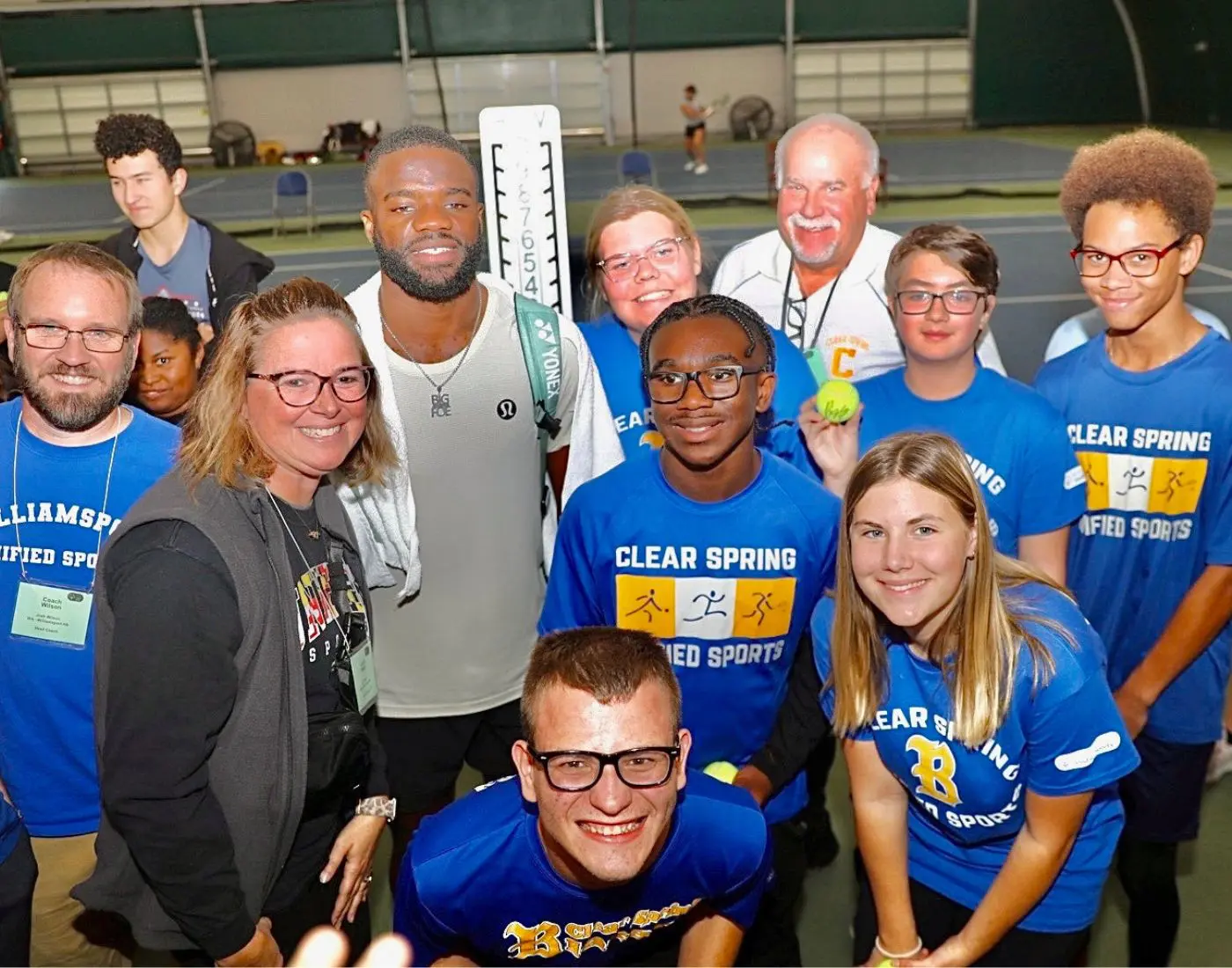
What we do at JTCC is create player-centered opportunities based on what the player wants to see in the sport, and the sky is the limit for what is possible—from wheelchair tennis players competing in the collegiate and professional space, to offering programs to players who are Blind or Low Vision, or Deaf or Hard of Hearing, to developing truly integrated events like mainstream and adaptive tournaments running side-by-side and unified doubles events for players with and without disabilities competing together. One thing we know for sure through what we have learned at JTCC: when we create opportunities, people find themselves in the sport.
The vision for adaptive tennis at JTCC is to create a comprehensive, integrated pathway for all players with disabilities to find community and unlock their potential. This is what we have succeeded in on the mainstream side of the sport at JTCC, and what is a very real possibility to create. As our program grows, serving more than 260 local players with disabilities and military veterans, each player has their own individual goals within the sport, and the larger we grow, the more diverse that pool of dreams becomes. There are pathways that can be created that run parallel to what exists in the traditional sport, and there’s pathways that can be integrated into what already exists, because of the unique aspect of tennis that players with and without disabilities can play together. What we do at JTCC is create player-centered opportunities based on what the player wants to see in the sport, and the sky is the limit for what is possible, from wheelchair tennis players competing in the collegiate and professional space, offering programs to players who are Blind or Low Vision, or Deaf or Hard of Hearing, to developing truly integrated events like mainstream and adaptive tournaments running side-by-side and unified doubles events for players with and without disabilities to compete together. One thing we know for sure from what we have learned at JTCC is that when we create opportunities, people find themselves in the sport.
For someone reading this interview who has never experienced adaptive sports firsthand, what would you want them to understand about why supporting this program matters? And what would you say to someone considering making a year-end gift to JTCC’s adaptive tennis program?
When people see adaptive sports for the first time, the feeling that comes to mind is often “inspirational.” However, as people dive deeper into learn more about the space and building relationships with players with disabilities, it quickly turns to “aspirational.” Players with disabilities playing the sport are as impressive as a high-performance player competing with grit to win a national title or an LTN player being brave and trying the sport for the first time.
Our adaptive tennis players at JTCC are experiencing the same benefits of the sport and striving for similar goals as mainstream players — and that is truly what excellence is. What makes us unique is that we are developing the model for how this can be replicated around the country, and when we try new things that haven’t been proven in the sport yet, it involves risk and commitment.
We need people who are excited about contributing and supporting things that have never been done in the sport — from creating consistent and accessible opportunities for all people to play tennis, to hosting world-class tournaments and events that allow our local players to see what’s possible in the professional space, to creating an inclusive society where players with and without disabilities are learning and playing tennis alongside each other.
It’s an opportunity to help define what’s possible for the sport of tennis at this critical juncture, as visibility and access are rapidly growing. These players have never seen opportunity in tennis like they do at JTCC, and there’s so much more left to be done to truly embrace and live JTCC’s mission of providing “Tennis for Everybody.”